
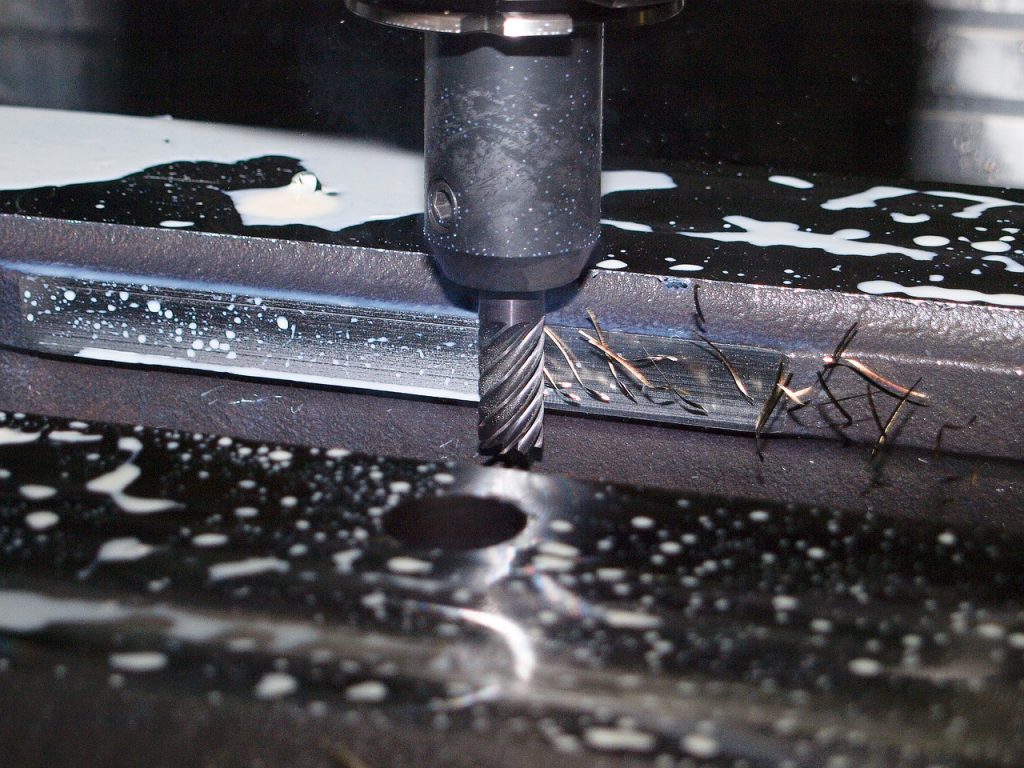
Aero Spec Engineering provides CNC machining of exotic alloys for petroleum parts requiring tight tolerances, verified dimensions and process control.
High-pressure petroleum equipment can place strict demands on dimensional accuracy, material compatibility and inspection. For petroleum projects involving CNC machining and exotic alloys, we machine components to client drawings and specifications using multi-axis equipment and in-house dimensional inspection at our Clayton South facility.
The key technical point is that machining accuracy and material selection are separate controls. We can manufacture the specified part accurately, but the client or design engineer must nominate an alloy grade suitable for the actual pressure, temperature, fluid chemistry and operating environment.
How CNC Machining Supports Exotic Alloys in Petroleum Applications
Aero Spec Engineering lists CNC multi-axis turning, 3-, 4- and 5-axis milling, EDM wire cutting, EDM die sinking, conventional grinding and CMM measuring among our capabilities. Our services page also identifies alloys, high-tensile tool steels, hard machining and exotic materials within our material capability.
That combination is relevant when a petroleum component has complex geometry, difficult-to-machine material or critical interfaces. CNC machining can control specified bores, shoulders, threads, sealing faces and mating features, while suitable inspection checks whether the finished dimensions remain within the drawing requirements. It does not, by itself, make a component suitable for high-pressure service.
Why Exotic Alloys Require Grade-Specific Machining Decisions
“Exotic alloys” cover materials with different machining and service characteristics, so the specified grade must suit the petroleum environment. A review in Applied Surface Science Advances identifies CO₂ and H₂S partial pressure, temperature, water content and fluid regime among factors influencing downhole corrosion; the machining controls below address manufacturing once the grade and acceptance criteria are defined.
Key machining controls include:
- Tooling and cutting strategy: Exotic alloys can increase heat and tool wear, so feeds, speeds and machining sequences must be controlled for accuracy.
- Workholding: Secure fixturing limits movement and distortion while maintaining access to critical datums, sealing faces and machined features.
- Dimensional control: Critical bores, threads, shoulders and mating surfaces are checked against drawing tolerances before release.
- Inspection planning: In-house CMM and measuring equipment support verification of tight dimensions and complex geometric requirements.
How We Verify CNC-Machined Petroleum Components Before Release
For petroleum work, dimensional non-conformance can mean rework, rejected parts or assembly delays. Our CNC machining and precision engineering services are supported by CAD/CAM capability, multi-axis machining centres and lathes, and a documented inspection process. Aero Spec states that manufactured components are examined to confirm required tolerances and requirements.
Where a drawing contains complex geometric relationships, CMM measuring can support repeatable dimensional verification. Our existing petroleum valve machining article also shows how dimensional control is relevant to flow-control components, while our CNC machining of exotic materials article discusses the additional machining considerations associated with specialised materials.
What to Supply for a CNC Machining Quote on Exotic Alloys
A useful CNC machining enquiry for exotic alloys should include the current drawing or CAD model, exact material grade and condition, required quantity, tolerances, surface-finish requirements, inspection expectations and any nominated documentation. Supplying these details reduces assumptions and lets us assess the part against our actual machining capability.
Send the specification through our machining enquiry page for review. We can assess the geometry, nominated material and inspection requirements, then quote a manufacturing approach for the petroleum component based on the information provided.
Optimized by: Netwizard SEO