
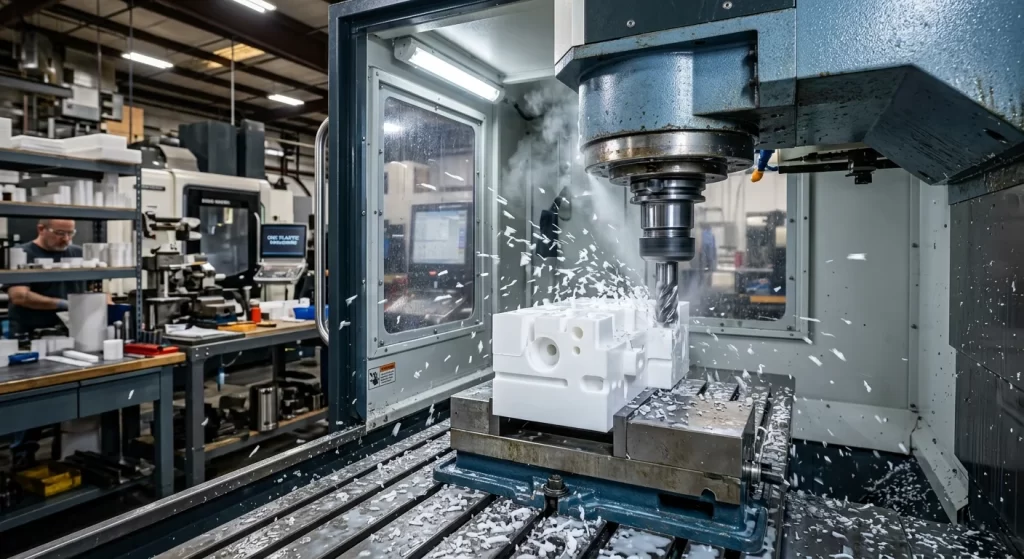
Source CNC plastic machining from Aero Spec Engineering in Melbourne for worn, obsolete or custom automation components made to your specifications.
Automation and production equipment often relies on plastic components that guide, space, protect or separate moving parts. When an original component is worn, obsolete or unavailable, CNC plastic machining can provide a replacement made to the required dimensions and application requirements.
When Does CNC Plastic Machining Suit High-Wear Automation?
CNC machining is suitable for automation components that need precise shapes, repeatable dimensions or custom replacements. At Aero Spec Engineering, we machine plastics, alloys, stainless steels and other engineering materials using conventional and multi-axis CNC equipment. Before machining, the geometry, material, tolerances, quantity and operating conditions should be confirmed to ensure the component suits its application.
Plastic Components Used in Automation Equipment
Automated machinery can contain plastic parts that experience repeated contact, sliding movement or positioning loads. Depending on the machine design, components submitted for machining may include:
- Wear strips and guides: Used where components need a defined contact or guiding surface.
- Bushes and spacers: Manufactured to specified dimensions where spacing, alignment or fit is important.
- Fixtures and machine components: Custom parts produced for specialised equipment where standard products do not match the required geometry.
- Replacement components: Existing parts that may be measured or reverse engineered when suitable information is available.
The required material and design should always be confirmed for the actual operating environment. Load, temperature, chemicals, friction, cleaning requirements and interaction with neighbouring components can all affect whether a particular plastic is appropriate.
What Information Helps with a Replacement Part?
A clear enquiry reduces assumptions and gives our team a better basis for assessing manufacturability. For CNC plastic machining projects, provide as much controlled information as possible, including:
- Drawings or CAD data: Supply current dimensions, tolerances and revision details where available.
- Existing samples: Aero Spec Engineering has in-house CMM measuring capability that can assist with measuring and reverse engineering existing parts.
- Material requirements: Identify the specified plastic rather than relying on colour or appearance alone.
- Quantity: Our published capabilities include high- and low-volume CNC multi-axis turning and milling.
- Application details: Explain where the component operates and any relevant wear, contact or environmental conditions.
For maintenance teams dealing with repeated component wear, our article on high-wear replacement components also explains why material, mating parts, alignment and operating conditions should be considered before assuming a new component will solve the underlying problem.
Safe Work Australia’s Managing the Risks of Plant in the Workplace Model Code of Practice states that plant should be maintained and repaired according to the manufacturer’s specifications. Replacement components therefore need to be considered as part of the wider maintenance and risk-management process, not as a substitute for checking the equipment itself.
Start Your CNC Plastic Machining Project with Aero Spec Engineering
Aero Spec Engineering is based in Clayton, Victoria and provides precision machining for automation, transport, mining, recycling, food, medical, packaging and other industries. Our CNC machining and precision engineering services include multi-axis turning and 3-, 4- and 5-axis milling, with inspection carried out throughout manufacturing.
If you need CNC plastic machining for a worn, obsolete or custom automation component, send us your drawing, sample, material requirement, quantity and required date. Request a quotation so we can review the component against our machining capabilities and project requirements.
Optimized by: Netwizard SEO