Solve complex manufacturing challenges. We offer expert machining of hardened tool steel at Aerospec Engineering in Melbourne to meet exact specifications.
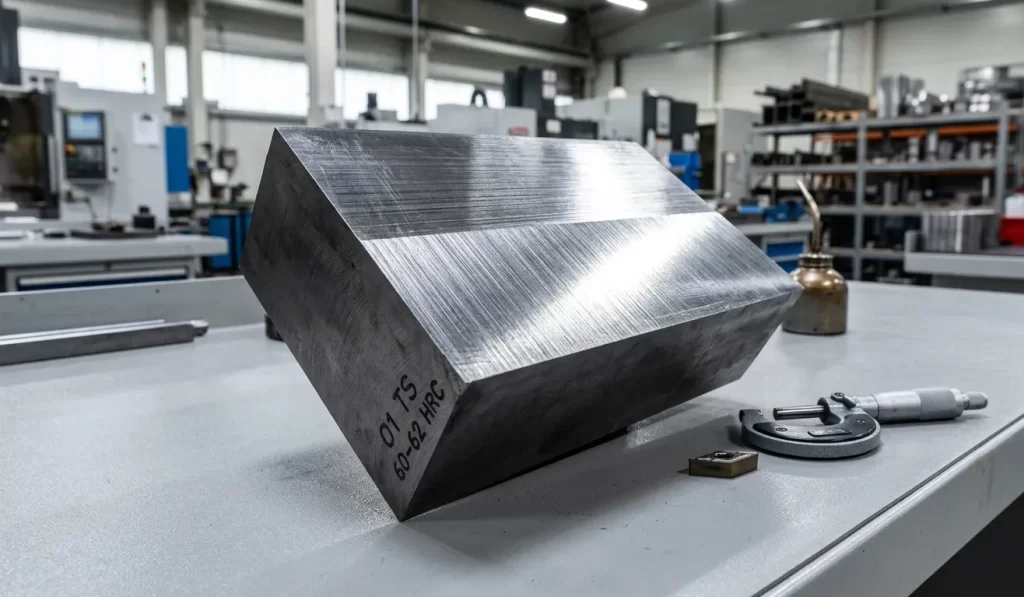
High-hardness alloys demand controlled machining and disciplined CNC execution. Machining hardened tool steel requires stable cutting conditions that manage heat, tool wear, and dimensional accuracy without compromising material properties. Manufacturers working to tight tolerances must balance performance, repeatability, and surface integrity.
Process Stability in Machining Hardened Tool Steel
Machining hardened tool steel requires a clear understanding of how the material behaves during cutting. Hardened grades are more resistant to wear and deformation, which places greater demand on tooling and machine stability. Secure setups and well-maintained equipment help maintain dimensional accuracy across production runs.
Heat control also influences surface finish and consistency. Excessive heat can affect material stability and shorten tool life if not properly managed. Appropriate cutting parameters, suitable tooling selection, and controlled coolant application support reliable hardened tool steel machining results.
Tooling And Setup Controls for High-Accuracy Components
Precision outcomes rely on disciplined preparation and capable equipment. The following technical controls strengthen machining stability and accuracy:
- Rigid CNC Platforms: High-stiffness CNC machines minimise vibration and chatter during cutting, helping maintain positional accuracy and consistent dimensional control throughout the machining cycle.
- Advanced Cutting Tools: Coated carbide or ceramic tooling is selected for durability and heat resistance, supporting cleaner cuts and more stable performance when machining hardened materials.
- Balanced Cutting Parameters: Carefully adjusted speeds and feed rates help manage heat generation, reduce tool strain, and maintain surface integrity across critical component features.
- Secure Workholding Systems: Precision clamping and stable fixturing prevent unwanted movement during machining, protecting concentricity, flatness, and overall geometric accuracy.
- In-Process Verification: Scheduled inspections and probing during production allow early detection of variation, helping confirm tolerance requirements before final component release.
Surface Integrity And Quality Control in Hardened Components
Surface finish and dimensional control influence long-term component performance. Machining hardened tool steel requires close monitoring of tool paths, chip evacuation, and spindle stability to reduce residual stress and maintain structural consistency.
At Aerospec Engineering, we apply structured quality-control procedures and documented inspection processes to confirm dimensional conformity. Our hardened tool steel machining capability is supported by calibrated equipment and experienced CNC technicians working to detailed client specifications.
Consistency across production strengthens reliability for demanding industries. Process documentation, parameter control, and measured inspection checkpoints contribute to repeatable results in hardened material applications.
Precision CNC Capability for Hardened Materials
Tight-tolerance hardened components require more than standard machining routines. Controlled hardened tool steel machining supports durability and accuracy in applications where reliability matters.
Aerospec Engineering integrates advanced CNC systems, disciplined process control, and experienced operators to manufacture complex hardened components with confidence. Our team understands the mechanical demands of machining hardened tool steel and applies practical methods that align with client engineering requirements.
Contact us to discuss your hardened tool steel component requirements and machining specifications.
Related Blog Article: Machining the Impossible: How We Tackle Complex Component Designs
Optimized by: Netwizard SEO